If you live in the USA, NoireTV now showing nationwide on Verizon Fios on channel 269. Press 269 on your remote control.NoireTV now on Verizon Fios Channel 269. Press 269 on your remote control. Follow us on Instagram@noiretvafricaand on Facebook ... www.facebook.com/caspennoire
As a woman of colour, racial gaslighting has been a painful experience that many people like me have had to deal with at some point in our lives.
You may already be familiar with the term gaslighting, which is a form of psychological abuse.
This was defined after the 1944 film Gaslight, a thriller about a young woman whose husband slowly tries to convince her she's going insane.
However, racial gaslighting is related specifically to psychological abuse surrounding racism.
Racial gaslighting often comes about when a victim is led to doubt and question their own sense of reality with regard to racism, says Seattle University's Angelique Davis, who's carried out a lot of research on the subject.
"Abusers will make them question their own judgement through victim blaming, policing their tone of voice, denial, dismissiveness and manipulation."
Angelique says that some of the techniques used to racially gaslight include: countering someone's memory of events, withholding "understanding" or refusing to listen, conveniently "forgetting" or denying that something happened, playing down a person's feelings as unimportant or irrational, diverting to focus on credibility of what someone is saying and victim blaming.
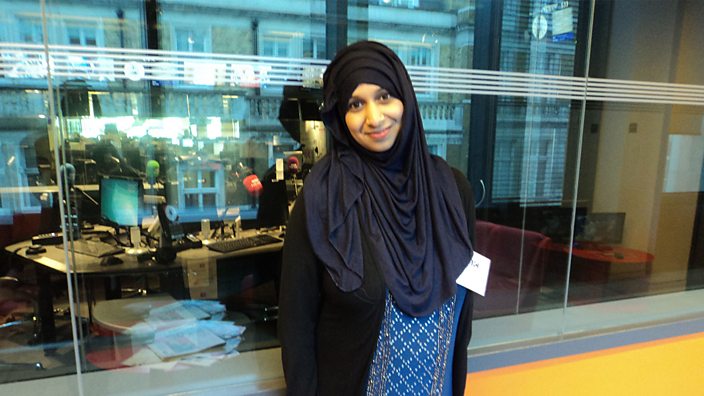
'I will not be conflicted into compromising my identity'
CONTRIBUTOR IMAGE
I remember being called derogatory names by a man in Glasgow because of the colour of my skin.
"Go back to your own country," he shouted, along with other statements suggesting I don't belong in Britain.
When I spoke to a friend that night about the incident, she questioned whether the person was really racist or had "other issues" that may have led him to act the way he did.
"I wouldn't worry too much," my friend said. "It's probably an isolated incident. I don't think racism exists anymore really."
She probably felt it would reassure me but racism does exist and it's people like me that have to bear the brunt of it.
"One comment I hear often is 'I don't think that was racist,' which again questions the victim, and also invalidates the victim. Both of these instances are a form of trauma," says trauma therapist Diana Anzaldua.
Speaking on the Black Lives Matter protests, Diana says, "we're hearing comments like, 'if you protested more peacefully, more people would listen.' This comment is essentially blaming the victim based on race."
My friend's dismissiveness and unwillingness to address the underlying problem is a prime example of racial gaslighting - and it can have implications for a person's mental health.
I remember feeling extremely low after this incident and like I wasn't accepted for being who I am.
It knocked my self-esteem to think that people want me to compromise my identity and be something I'm not.
I will not be conflicted into compromising my identity as a woman of colour or as a Muslim in hijab and change myself to meet the expectations of others.
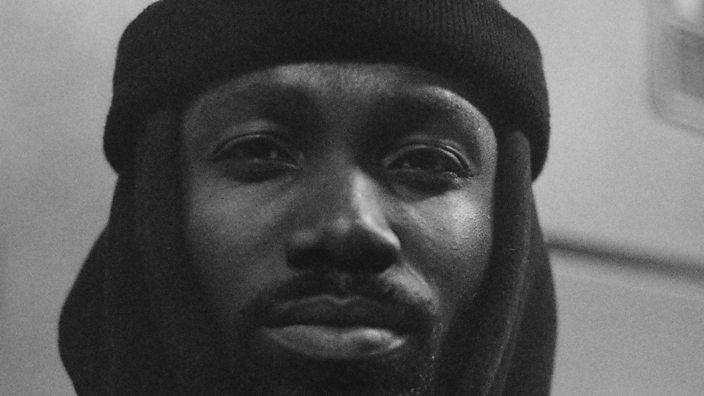
'I am not allowed to be who I am'
CONTRIBUTOR IMAGE
Filmmaker and art director Ezekixl Akinnewu remembers being racially gaslighted while working in the art sector and being "tone policed" by a colleague for his flamboyant personality and for being "too loud."
"When you are like that around people of different races, they come and say, 'why are you so loud?' And when I say that it is just the way I am, they take it [that] you are being 'aggressive.'"
This is just one example of racial gaslighting that has happened to Ezekixl. He describes feeling like, "I am not allowed to be who I am".
"It made me feel low, unwanted and a foreigner in a country that I call home. It's like you are always reminded to stay in your place if you are a person of colour but nobody should have to feel that they don't belong because of the colour of their skin.
"Being loud in my culture and as an African man is seen as a form of love and trust and where you can be yourself."
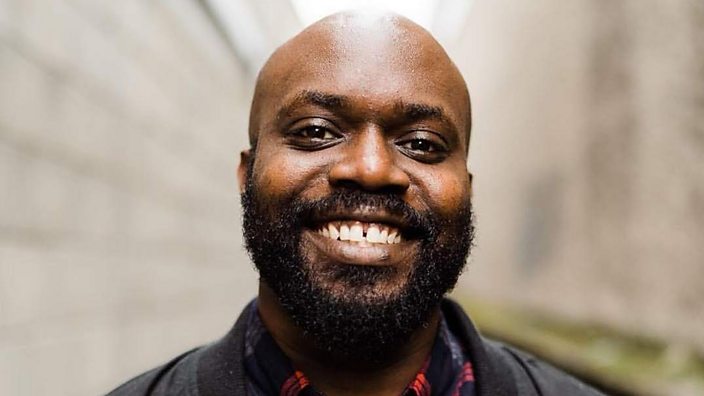
'You are left to feel like you are the person with the problem'
CONTRIBUTOR IMAGE
"The environments have always varied, but one thing is for certain that as a black person your thoughts and feelings are rarely listened to or validated by your white counterparts," adds Ica Headlam, founder of We Are Here Scotland.
Ica works with vulnerable teenagers and occasionally he has to challenge young people who use racist or offensive language. In cases like this, Ica says, "usually it's downplayed by your colleagues or you end up engaging in this debate about racism and why it's wrong, which in itself becomes more frustrating.
"Or you are faced with this awkward silence from people who clearly struggle with talking about this with their black colleague. So, you are left to feel like you are the person with the problem."
Five ways to stop racial gaslighting
Inspired by tools from Everyday Racism (a project dedicated to the experiences of racism), here are five ways to stop racial gaslighting:
1. If someone who is BIPOC (black, indigenous and people of colour) shares their experience of racism with you, learn to listen carefully to what they have to say and acknowledge their feelings.
2. Educate yourself on racism and understand the issues related to white privilege.
3. Ensure that you offer support and empathy and don't question a person's lived experiences of racism.
4. Recognise if you have internal defensive responses to racism.
5. Call it out and be an ally to those who have suffered from racism and the forms that it manifests in.
If you recognise that you are being racially gaslighted, Angelique suggests:
■ Collect and document the evidence. This can include making notes, voice memos, photographs or email.
■ Reach out to your support networks and have the "did I hear that?" or "did that really happen?" conversation with others present.
■ Take care of yourself and do things to nurture your wellness. "Racial gaslighting is designed to tear us down, so making sure you stay mentally, physically, and spiritually healthy is of utmost importance," she says.
Newly surfaced video is complicating the investigation into a deadly shooting at a “No Kings” protest in Salt Lake City, raising questions about the actions of both the armed suspect and the armed volunteer who fired the fatal shots. The Incident Arturo Gamboa was arrested on suspicion of murder after police said he pulled an AR-15-style rifle from his backpack at a protest and was subsequently shot at by a volunteer “peacekeeper.” One of the bullets struck and killed Arthur Folasa Ah Loo, a 39-year-old fashion designer and father of two who was attending the protest. The protest, which drew about 18,000 participants, was one of many nationwide opposing the Trump administration. It was organized by Utah 50501, a local chapter of a larger anti-authoritarian movement. What the New Video Shows Initial accounts from police and witnesses claimed Gamboa brandished his weapon and ran toward the crowd, prompting the peacekeeper to open fire. But new video footage reported by KSTU ap...
Senate Majority Leader John Thune (R-SD) walks toward the Senate floor after the Senate stayed in session throughout the night at the U.S. Capitol Building on July 1, 2025 in Washington, DC. The Senate approved President Donald Trump’s signature policy bill Tuesday afternoon after a record-breaking 25 hours of negotiations to win over some final Republican holdouts. Key Facts The Senate passed the legislation 51-50, with Vice President JD Vance casting the tie-breaking vote. Three Republicans—Sens. Susan Collins, Maine, Rand Paul, Ky., and Thom Tillis, N.C..—voted against the bill. The 887-page “megabill” includes numerous changes to both the House-passed version of the legislation and the initial Senate draft. These are some of the key omissions and additions the Senate negotiated over the weekend and into Tuesday: Cuts to Medicaid cost-sharing :The amendment proposed by Sen. Rick Scott, R-Fla., would have blocked a significant portion of federal Medicaid funding for some ...
Burkina Faso’s transitional parliament has passed a controversial new law criminalizing homosexuality, with offenders facing up to five years in prison. The legislation, part of amendments to the Persons and Family Code, makes Burkina Faso the latest African nation to tighten restrictions on LGBTQ+ rights. The law also includes stricter provisions on nationality and statelessness. Since seizing power in a 2022 coup, Burkina Faso’s military leadership has grown increasingly intolerant of dissent while battling worsening Islamist insurgencies. The 71-member unelected transitional parliament unanimously approved the measure on Monday. It now awaits the signature of junta leader Ibrahim Traoré. Justice Minister Edasso Rodrigue Bayala announced on state television that offenders will face prison terms of two to five years and heavy fines. He added that repeat offenders who are foreign nationals will be deported, while condemning same-sex relations as “bizarre behavior.” The law, which ...

 As a woman of colour, racial gaslighting has been a painful experience that many people like me have had to deal with at some point in our lives.
You may already be familiar with the term gaslighting, which is a form of psychological abuse.
This was defined after the 1944 film Gaslight, a thriller about a young woman whose husband slowly tries to convince her she's going insane.
However, racial gaslighting is related specifically to psychological abuse surrounding racism.
Racial gaslighting often comes about when a victim is led to doubt and question their own sense of reality with regard to racism, says Seattle University's Angelique Davis, who's carried out a lot of research on the subject.
"Abusers will make them question their own judgement through victim blaming, policing their tone of voice, denial, dismissiveness and manipulation."
Angelique says that some of the techniques used to racially gaslight include: countering someone's memory of events, withholding "understanding" or refusing to listen, conveniently "forgetting" or denying that something happened, playing down a person's feelings as unimportant or irrational, diverting to focus on credibility of what someone is saying and victim blaming.
As a woman of colour, racial gaslighting has been a painful experience that many people like me have had to deal with at some point in our lives.
You may already be familiar with the term gaslighting, which is a form of psychological abuse.
This was defined after the 1944 film Gaslight, a thriller about a young woman whose husband slowly tries to convince her she's going insane.
However, racial gaslighting is related specifically to psychological abuse surrounding racism.
Racial gaslighting often comes about when a victim is led to doubt and question their own sense of reality with regard to racism, says Seattle University's Angelique Davis, who's carried out a lot of research on the subject.
"Abusers will make them question their own judgement through victim blaming, policing their tone of voice, denial, dismissiveness and manipulation."
Angelique says that some of the techniques used to racially gaslight include: countering someone's memory of events, withholding "understanding" or refusing to listen, conveniently "forgetting" or denying that something happened, playing down a person's feelings as unimportant or irrational, diverting to focus on credibility of what someone is saying and victim blaming.


Comments
Post a Comment